Occupy Faith

Click thru to site
LECTIONARY

Click thru to site
Sunday, August 30, 2015


Thursday, June 25, 2015
Ramadan : questions and answers
Christianity is one of the three Abrahamic religions - Judaism and Islam are the others - which emerged from the deserts of the Middle East.
At the moment, our Muslim brothers and sisters are celebrating Ramadan. The document below will inform.

Thursday, October 16, 2014
Hate evil and love good, then work it out in the public square: so sez Amos. #Blogaction14, #Inequality, #Oct16, #Ballarat
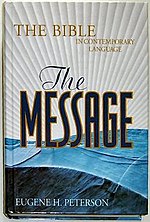
Some years ago, Eugene H Peterson produced The Message. There are many versions of The Bible - and some of these are in modern English. The Message, like it or not, is rather different. It is written in what is referred to as "idiomatic" English. One thing is quite clear - it packs a punch!
I love the Eighth Century Prophets of whom Amos is one. I regard them as some of my best friends in life. I am writing to-day for Blog Action Day 2014. The theme this year is "Inequality". Amos, while his words have reverberated over almost three millenia, speaks to the people of the early 21st century. As you can read, Amos has no need for all the self-indulgence of official religion. Like Jesus, he expects actions ... anyway, read it for yourself and think of the world to-day. What is our role in redressing what is happening? Are we prepared to give time, energy, thought and organisation to making humans truly human and the world truly the place the Creator meant it to be.
People hate this kind of talk.
Raw truth is never popular.
But here it is, bluntly spoken:
Because you run roughshod over the poor
and take the bread right out of their mouths,
You’re never going to move into
the luxury homes you have built.
You’re never going to drink wine
from the expensive vineyards you’ve planted.
I know precisely the extent of your violations,
the enormity of your sins. Appalling!
You bully right-living people,
taking bribes right and left and kicking the poor when they’re down.
13 Justice is a lost cause. Evil is epidemic.
Decent people throw up their hands.
Protest and rebuke are useless,
a waste of breath.
Decent people throw up their hands.
Protest and rebuke are useless,
a waste of breath.
14 Seek good and not evil—
and live!
You talk about God, the God-of-the-Angel-Armies,
being your best friend.
Well, live like it,
and maybe it will happen.
and live!
You talk about God, the God-of-the-Angel-Armies,
being your best friend.
Well, live like it,
and maybe it will happen.
15 Hate evil and love good,
then work it out in the public square.
Maybe God, the God-of-the-Angel-Armies,
will notice your remnant and be gracious.
then work it out in the public square.
Maybe God, the God-of-the-Angel-Armies,
will notice your remnant and be gracious.
16-17 Now again, my Master’s Message, God, God-of-the-Angel-Armies:
“Go out into the streets and lament loudly!
Fill the malls and shops with cries of doom!
Weep loudly, ‘Not me! Not us, Not now!’
Empty offices, stores, factories, workplaces.
Enlist everyone in the general lament.
I want to hear it loud and clear when I make my visit.”
God’s Decree.
Fill the malls and shops with cries of doom!
Weep loudly, ‘Not me! Not us, Not now!’
Empty offices, stores, factories, workplaces.
Enlist everyone in the general lament.
I want to hear it loud and clear when I make my visit.”
God’s Decree.
Friday, September 26, 2014
#BlessedAreTheCrazy - Please join this synchroblog event

For Desert readers who blog, please consider this synchroblog which is happening NOW! Details below >>>
There is a synchroblog coming up. This is the facebook site which references it >>> http://goo.gl/xMzYBH The details below are copied from the site:
To commemorate the launch of Sarah Griffith Lund‘s new book — Blessed Are The Crazy: Breaking the Silence About Mental Illness, Family, and Church — and to participate in National Mental Illness Awareness Week (Oct. 5-11), we invite you to join in a Synchroblog on mental illness, family, and church.
Break the silence by sharing your personal story of how you’ve been impacted by mental illness in your family and/or in your faith community.
NOTE: We are joining with another synchroblog for this event, so the posting date and instructions are a bit different. This is also coming up quickly!
First, publish your post by midnight on MONDAY, October 6th. Post the links in the comment section here as normal. We at the synchroblog will post all your links over at the Facebook event for the other group.
If you want, you may also use the hashtag #BlessedAreTheCrazy when you post your links to your blog posts on Facebook, Twitter, etc. Follow the hashtag:https://twitter.com/search?q=%23BlessedAreTheCrazy
Second, we will put up the full link list on Tuesday, October 7th for you to publish at the end on your blog post.
We hope you will participate and break the silence by sharing YOUR story!
Here is the Synchroblog post for this event:
Wednesday, August 27, 2014
From the desert ancient communities come... please consider how you can help them. They face extinction.

Further reading:
Minorities in Iraq
Who are the Yazidis and why is ISIS hunting them?
GENOCIDE: Christians, religious minorities flee violent persecution in Iraq
No mass said in Mosul for the first time in 1600 years
Mosul
Wednesday, August 20, 2014
Living out the teachings of Jesus in Australia - and, in particular, the Anglican parish of Gosford

 Father Rod Bowers is a bit of a stand-out within the Anglican Church in Australia. His fame has grown on social media with his use of the noticeboard at the Anglican Church of Gosford. Father Rod posts pithy sayings on the church noticeboad, photographs them and everyone sees them on Facebook. Most - but not all - relate to current affairs. With some of these, Father Rod points out the contrast with the teachings of Jesus. However, as you can see from the picture above of the current (as this post is written) header on the parish Facebook site, Father Rod has become quite blunt indeed on his assessment of this nation's matters of governance.
Here is the latest noticeboard offering from Father Rod ...

(for those who haven't heard what Australia's Prime Minister
has been saying this week - this is a reference to the PM's
talk of TEAM AUSTRALIA)
Saturday, August 09, 2014
Appeals for prayers, intervention and support for the suffering peoples of Middle East and North Africa from Kurdfish Muslims and Christian Chaldeans

August 2014
Esteemed Religions for Peace Colleagues:
Warm greetings.
Adding to the great sufferings of peoples in the Middle East-North Africa Region are the currently unfolding events in Iraq.
H.E. Sheikh Majid Hafeed, an Iraqi Kurdish Muslim and Honorary President of Religions for Peace International, has contacted our International Secretariat strongly calling for intervention and support to protect the Yazidis in the town of Sinjar, northern Iraq.
They are currently undergoing an attack by the ISIS / ISIL terrorist group. Sheikh Majid reports to us that thousands have been massacred, hundreds of thousands have fled and their homes and shops have been looted and burned. You will find Sheikh Majid's appeal (in Arabic) here.
His Holiness Louis Raphael Sako, the Christian Chaldean Patriarch of Babylon and a Co-President of Religions for Peace International, has also contacted us with an urgent appeal for the 100,000 Christians who have fled their homes toward the Kurdish cities of Erbil, Duhok and Soulaymiya. You will find Patriarch Sako's appeal here.
In response, Religions for Peace is transmitting these appeals to the President of the United Nations Security Council, urging that the Security Council take appropriate measures to protect these innocent people.
In addition, allow me also to request that all members of Religions for Peace around the world hold these suffering peoples in their prayers. Let each of us pray in accord with her or his own tradition in solidarity with all across this region who are struggling to bear unbearable suffering.
Yours in solidarity for Peace,

Dr. William Vendley
Secretary General
Religions for Peace
RELIGIONS FOR PEACE--the world's largest and most representative multi-religious coalition-advances common action among the world's religious communities for peace. Religions for Peace works to transform violent conflict, advance human development, promote just and harmonious societies, and protect the earth. The global Religions for Peace network comprises a World Council of senior religious leaders from all regions of the world; five regional inter-religious bodies and ninety national ones; and the Global Women of Faith Network and Global Interfaith Youth Network.
777 United Nations Plaza I New York, NY 10017 USA I Tel: 212 687-2163 I Fax: 212 983-0098
www.rfp.org
BTC Editor's Note:The area of the warfare mentioned above is in one of the oldest parts of human history in the world. War has diminished and eradicated much of this evidence. Readers will remember the looting of the National Museum of Iraq in 2003. Readers will also recalled the destruction of the Buddhas of Bamiyah in 2001. The heritage of these ancient civilisations are not only informative and precious to the peoples in whose regions they are situated. They are precious to all of us. The references used in the production of these antiquities are references to all of humanity. Human life to-day is of vital importance to all of us. So is our shared and ancient histories.
Tuesday, August 05, 2014
Blessed Is The Man - Divna

Beautiful music to bring peace to your spirit and encourage your meditations.
To find out more please visit Father Michael Marsh's blog, Interrupting the Silence.
Friday, April 18, 2014
The Blessed Easter Triduum at Saint Paul's Anglican Church, Ballarat
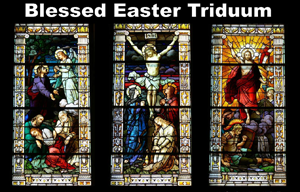
We have been on pilgrimage for the last six weeks.
A pilgrimage of penitence and remembrance.
Now the climax is upon us -
The Blessed Triduum or The Great Three Days.
It began last night as we remmembered
and partially re-enacted
which he celebrated with is friends.
The photos below were taken by my friend, Ian Hall.
You can find more at his blog, Spiritual Journey of life.

Father Constantine - Footwashing
St Paul's Anglican Church, Humffray Street, Ballarat

Worship at the Altar of Repose
If you would like to celebrate The Blessed Triduum
with us at Saint Paul's here are the times:
Good Friday
11 a.m: Stations of the Cross
3 p.m: Liturgy of the Passion
Saturday
8 p.m: Vigil Service at Christ Church Cathedral, Lydiard Street
Easter Sunday
8 a.m: Lighting of the New Fire and Eucharist
10 a.m: Procession, Sung Eucharist, Renewal of Baptismal Vows
God willing, the writer will be doing the Second Reading
at this afternoon's service.
If you are there, please come up afterwards and say hello.
Monday, April 14, 2014
Palm Sunday - Christ Church Anglican Cathedral, Ballart - Pilgrim's Service

Pilgrim's Service with symbols of service.
Among the symbols brought to the altar are -
A stack of lego blocks from a Lego Club
A cornflakes packet from a Breakfast Club
Coathangers from the Sebastopol Op Shop
A feature of Palm Sunday in Ballarat was the evening Pilgrim's Service at the Anglican Cathedral. What follows is a Prayer to Jesus, Prince of Peace, to start - as pilgrims - our Holy Week journey.
Jesus, Prince of Peace,
humble and riding on a donkey.
Jesus, disturber of the peace,
you upset bad religion when it gets in the way of God.
Kyrie eleison, Christe eleison, Kyrie eleison.
Jesus, upsetter of self-righteousness,
you turn questions on their head, offering no instant answers, but showing the way.
Kyrie eleison, Christe eleison, Kyrie eleison.
Kyrie eleison, Christe eleison, Kyrie eleison.
Jesus, lover of the lost,
you say "forgive" when we ant to shout "condemn!"
Kyrie eleison, Christe eleison, Kyrie eleison.
Jesus, host at the table,
you share your best even in the face of the worst.
Kyrie eleison, Christe eleison, Kyrie eleison.
Kyrie eleison, Christe eleison, Kyrie eleison.
Jesus, Saviour of the world
- yes, even the world
which wants you
until it meets you
Kyrie eleison, Christe eleison, Kyrie eleison.
Kyrie eleison, Christe eleison, Kyrie eleison.
Monday, March 24, 2014
Morning Prayer: The Way, The Truth and The Life
Back in 2007, I posted the words of a Morning Prayer of my own devising. I thought it time to bring it once more to the forefront on this Monday of Week 3 of Lent, 2014. ~~~~~

Thomas said to Him, “Lord, we do not know where You are going, and how can we know the way?” Jesus said to him, “I am the way, the truth, and the life. No one comes to the Father except through Me.

Thomas said to Him, “Lord, we do not know where You are going, and how can we know the way?” Jesus said to him, “I am the way, the truth, and the life. No one comes to the Father except through Me.
John 14:5,6
MORNING PRAYER
Lord Jesus Christ
You are The Way, The Truth and The Life.
You are The Way.
Guide me.
Plant my feet firmly in your path
That I may not deviate either to left or to right
But follow you closely:
Just an arm's length away that I might touch the hem of your garment:
Within earshot that I might hear your word and your will for my life.
You are The Truth
Teach me, Guide me, Illuminate me.
Teach me to worship you in Spirit.
Teach me to worship you in Truth.
So grace me and discipline me, Lord,
That I may exhibit your Truth and Your Spirit
In my daily walk.
You are The Life
The Life given for me on Calvary
Grant that I might not live
But that you might live in me
Dreaming your dreams through me
Tasting, touching, sensing, the world
Through me.
Come, Lord Jesus, come in glory.
Saturday, March 22, 2014
Lives given for others : Stations of the Cross - Of gods and men

We began with the ancient Christian meditation on the last hours of Jesus, The Stations of the Cross. Last night, the experience had added flavour. As well as the traditional form of meditation, the words of Julian of Norwich were added. These words come from her visions recorded in Revelations of Divine Love. This way of 'doing' The Stations was most helpful and enlarging. Picture at left from here.
After The Stations, we had a shared meal at The Parish Centre followed by a movie.
The movie was something very special - Of gods and men.
The movie is based on the events leading up to and surrounding the deaths of seven Trappist monks, men of the Cistercian order, in Algeria in 1996. These men were of the same religious order as the well-known Thomas Merton. The film is beautiful, reflective, much awarded and should be accompanied by a box of tissues. For a taste, please watch the trailer below.
The various characters depicted were interesting - but none more so than the leader of this little band of men living in the shadow of the Atlas Mountains, Christian de Cherge. Christian's leadership and legacy demonstrate the kinship that can be found among the people called Christians and the people called Muslims.
In the movie, we see - without explanation - Christian writing a letter and putting it in an envelope and sitting it on his desk. This was duly found following his capture and death and is known as his "Last Testament".......

Taken from First Things -
If it should happen one day—and it could be today—that I become a victim of the terrorism which now seems ready to encompass all the foreigners living in Algeria, I would like my community, my Church, my family, to remember that my life was given to God and to this country. I ask them to accept that the One Master of all life was not a stranger to this brutal departure. I ask them to pray for me: for how could I be found worthy of such an offering? I ask them to be able to associate such a death with the many other deaths that were just as violent, but forgotten through indifference and anonymity.My life has no more value than any other. Nor any less value. In any case, it has not the innocence of childhood. I have lived long enough to know that I share in the evil which seems, alas, to prevail in the world, even in that which would strike me blindly. I should like, when the time comes, to have a clear space which would allow me to beg forgiveness of God and of all my fellow human beings, and at the same time to forgive with all my heart the one who would strike me down.I could not desire such a death. It seems to me important to state this. I do not see, in fact, how I could rejoice if this people I love were to be accused indiscriminately of my murder. It would be to pay too dearly for what will, perhaps, be called “the grace of martyrdom,” to owe it to an Algerian, whoever he may be, especially if he says he is acting in fidelity to what he believes to be Islam. I know the scorn with which Algerians as a whole can be regarded. I know also the caricature of Islam which a certain kind of Islamism encourages. It is too easy to give oneself a good conscience by identifying this religious way with the fundamentalist ideologies of the extremists. For me, Algeria and Islam are something different; they are a body and a soul. I have proclaimed this often enough, I believe, in the sure knowledge of what I have received in Algeria, in the respect of believing Muslims”finding there so often that true strand of the Gospel I learned at my mother’s knee, my very first Church.My death, clearly, will appear to justify those who hastily judged me naive or idealistic: “Let him tell us now what he thinks of it!” But these people must realize that my most avid curiosity will then be satisfied. This is what I shall be able to do, if God wills”immerse my gaze in that of the Father, to contemplate with him his children of Islam just as he sees them, all shining with the glory of Christ, the fruit of his Passion, filled with the Gift of the Spirit, whose secret joy will always be to establish communion and to refashion the likeness, delighting in the differences.For this life given up, totally mine and totally theirs, I thank God who seems to have wished it entirely for the sake of that joy in everything and in spite of everything. In this “thank you,” which is said for everything in my life from now on, I certainly include you, friends of yesterday and today, and you my friends of this place, along with my mother and father, my brothers and sisters and their families the hundredfold granted as was promised!And you also, the friend of my final moment, who would not be aware of what you were doing. Yes, for you also I wish this “thank you”—and this adieu—to commend you to the God whose face I see in yours.And may we find each other, happy “good thieves,” in Paradise, if it pleases God, the Father of us both. Amen.
Translated by the Monks of Mount Saint Bernard Abbey, Leicester, England.
Tuesday, March 18, 2014
Crafting a spirit

Anna Quindlen’s Short Guide to a Happy Life, a soul-uplifting must-read in its entirety:
Monday, March 17, 2014
A Prince of Peace! Why not a Minister for Peace?

www.womensweb.com.au
Women Working Together suffrage and onwards
www.womenworkingtogether.com.
Prejudice and Reason
www.prejudiceandreason.com.auT
Subscribe to:
Posts (Atom)